THE MORE YOU FALL, THE MORE YOU LEARN: Jackson hole edition

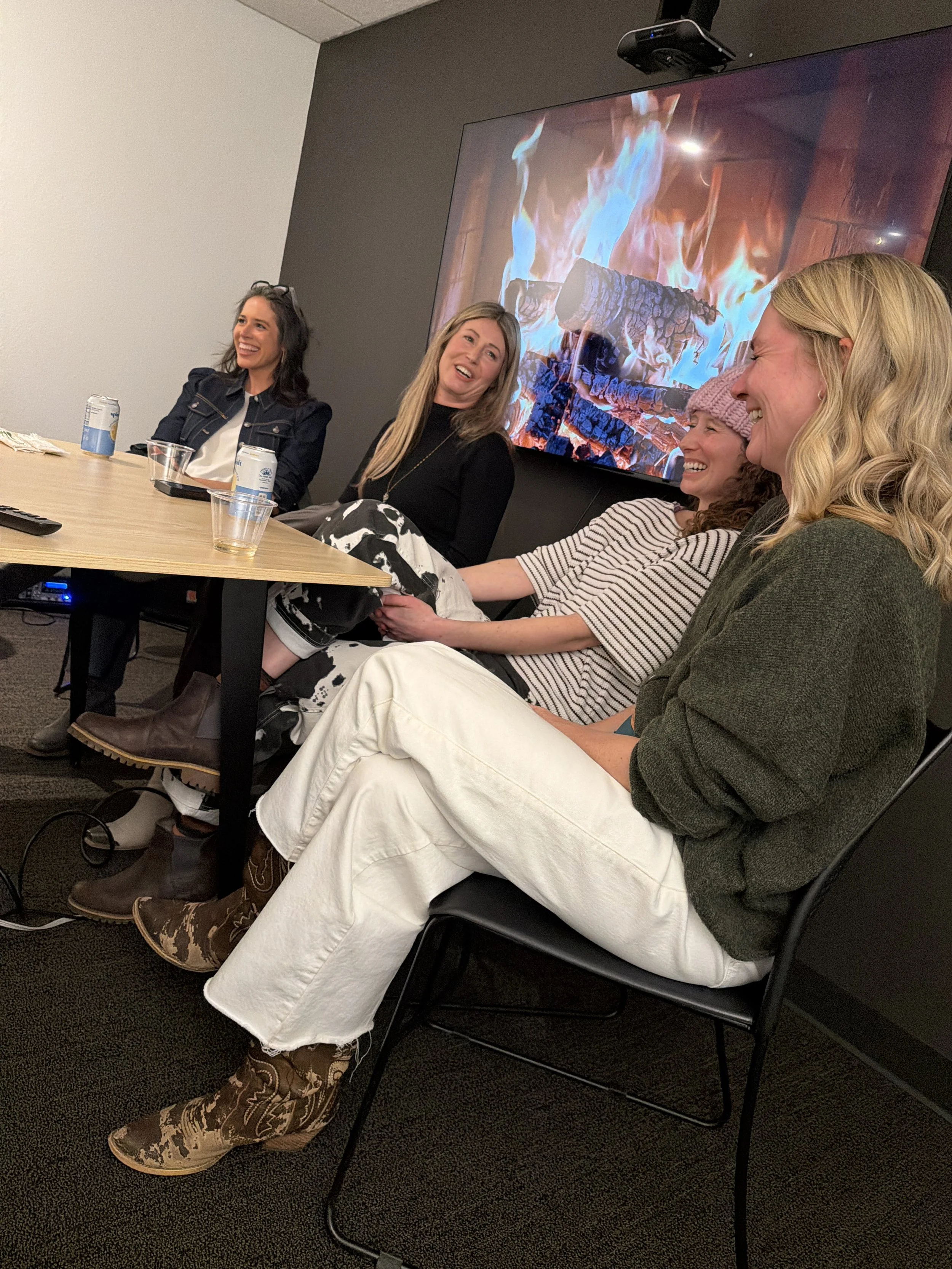
Fireside chat in Jackson Holewith Kelli Jones, Noso Patches; Lily Krass Ritter, Beyond Skid; and Tana Hoffman, ILLA App. moderated by Charlotte Lilley, The Retreat Co

Q: To start, can you each tell us a little about your upbringing and what you thought you wanted to be when you grew up?

Lily: I’m a writer. I work as the editor of The Ski Journal and I also write cookbooks (Ski Snacks and Beyond Skid: A Cookbook For Ski Bums) with my husband Max. Writing has always been part of who I am, even though I didn’t always think that’s what I wanted to do. When I was a baby my grandma looked at me while my mom was holding me and said, “Look at the way she’s observing the room. She’s going to be a writer.”

It took me until my twenties to really embrace that. Writing was always how I processed the world and communicated, but I didn’t necessarily see it as a career path right away. Honestly, when I was younger I just wanted to be a ski bum.

Tana: I grew up in New Hampshire and my parents were really adventurous. I actually spent the first two years of my life living on a sailboat, which everyone thought was crazy. We spent a lot of time outdoors growing up. In high school I worked at skate shops, surf shops, and ski shops. I was a total tomboy and loved anything outside.

When I went to college I studied macroeconomics and languages because I thought I was going to work for the United Nations doing environmental economic policy. But halfway through college I realized I hated being stuck in a city environment. So I reorganized all my classes to the mornings and spent my weekends working at a ski resort. Eventually I graduated early because I just wanted to get back to the mountains.

Kelli: I grew up in Youngstown, Ohio. My family had boats on Lake Erie so we spent a lot of time in the water. I was a swimmer and gymnast growing up and ended up swimming Division 1 in college. I’ve always had a lot of energy and loved being active.

I was also the mascot in high school and college, which probably tells you a lot about my personality. After college I rode my bike across the country and eventually ended up in Jackson because I literally ran out of money here. I stayed in the yurt park in Kelly for a while and just completely fell in love with the Tetons.

Q: Did any of you leave Jackson after moving here and then come back?

Kelli:I did briefly. I left to go to graduate school. I studied psychology and got my master’s degree. After that I came back to Jackson pretty quickly. I moved here in 2002, left briefly for school, and then returned full time.

Tana:I never left once I got here. Before Jackson, I moved around constantly. I never stayed anywhere longer than two or three seasons because I was always chasing the next mountain town or adventure. Then I met my husband, so I’m stuck here (laughs). But I found a really special community here, with a strong support circle committed to staying here long-term and building lives here. I don’t know if I could re-create it anywhere else. 

Q: Since this is many people’s first time skiing Jackson, what’s something special about skiing here or something you love about living here?

Tana: One thing I love about Jackson is how accessible the outdoors are. You don’t always have to go deep into the mountains for an amazing experience. For example, skinning up Snow King to watch the sunrise or sunset is incredible. You can go up, enjoy the view, ski down, grab coffee or brunch, and still get to work afterward. That accessibility to nature right in town is really special.

Kelli: Snow King is such a hidden gem. I always joke that it shouldn’t be called Snow King — it should be called Snow Queen — because there are so many women up there. There’s rarely a line and it’s such a great place to ski or skin for sunrise and sunset.
Q: What surprised you most about entrepreneurship?

Lily: I’ve been surprised in a good way by the community that forms around creative work. Writing has connected me with so many interesting people and unexpected collaborations.

Kelli: How many different roles you end up playing. You might start a company because you love the creative side of something, but suddenly you're also the customer service rep, attorney, accountant, the logistics manager, the shipping department, and the HR dept.

Tana: For me it was how emotional entrepreneurship can be. When you run your own company the business becomes deeply personal. The highs feel incredible, but the lows can feel really heavy.

Q: What have you learned about your own voice or identity through your work?

Lily: For me it was learning to trust my voice. When I first started writing professionally I tried to write the way I thought people expected writers in the ski industry to sound. 

Over time I realized people responded most to the stories where I wrote naturally. My own perspective and style were actually the things that made my work meaningful.

Q: Our theme today is “the more you fall, the more you learn.” Can you share a mistake or difficult moment in business that shaped how you run your company today?

Kelli: One that really stands out happened with one of our volume custom orders. Everything arrived the night before we were supposed to start the assembly and during our QC process I realized the custom header card design was printed and cut to the wrong size and the patch graphic was incorrect.  It was an order for 150,000 + patches, it was what we call internally an impact order. 

Our partner had already built their retail store end caps for their marketing campaign. So I had to call our partner and explain the issue.

I offered a discount to keep the order moving forward because of the design and production errors. It was a rush job, we only had 3 weeks to turn it around and didn’t have time to reprint it.  Also, my company’s DNA is rooted in sustainability, so I refused to start over again. Our partner agreed, and we moved forward with reprinting the packaging, and salvaging the patches with the slightly wrong artwork.  

We sat on the misprinted packaging until we needed to place a re-order for our internal packaging, and printed over the mis-printed packaging and repurposed them. It was painful financially, but it taught me a lot about systems, double-checking work, and building strong relationships with partners.

Tana: One of my biggest lessons came from my company Mountainist, which sold women’s outdoor gear for motorized sports like dirt biking and snowmobiling. During COVID there was a surge in demand for outdoor gear. I ordered a lot of inventory expecting the demand to continue. But supply chain issues hit and the market shifted.

The products people wanted became unavailable and the items I had in stock stopped selling. Shipping costs also increased dramatically. I ended up closing the business with thousands of dollars worth of inventory that I had to personally pay off. It was a tough experience, but it taught me a lot about inventory management, margins, and how quickly markets can change.

Q: How do you balance running a business while also managing social media?

Kelli: I try to think of social media as storytelling rather than marketing. When I frame it that way it feels less like a chore and more like sharing what’s already happening.  I love thinking, “this is Noso’s television show, what’s on today’s programing”? 

Tana: Consistency matters more than perfection. You don’t have to post perfectly polished content every time. Showing up consistently and sharing the journey is what builds connection.

Lily: Authenticity matters. People can tell when something feels forced.

Q: If you could give your younger self one piece of advice, what would it be?

Lily: Stop trying to sound like someone else. Your voice is enough.

Tana: Take risks sooner. The things you worry about often aren’t as scary as they seem.

Kelli: Don’t be afraid to ask for help. People are often much more willing to help than you expect.


Big thanks to these ladies in openly sharing their stories and experiences! Conversations like this remind us that falling is part of the process, and those moments are often where the most learning happens.

Next
Next

It’s not about age, it’s about adventure